If you feel like you’re suddenly gaining belly fat during perimenopause despite eating well, exercising and “doing everything right,” you’re not imagining it.
Many women feel frustrated when strategies that worked for years suddenly stop working.
You may find yourself:
- eating the same way as before
- exercising consistently
- cutting calories
- trying to eat healthier
…yet your waistline changes anyway.
This can feel confusing, discouraging and unfair.
But in many cases, this shift reflects real physiological changes happening during perimenopause — not laziness or lack of discipline.
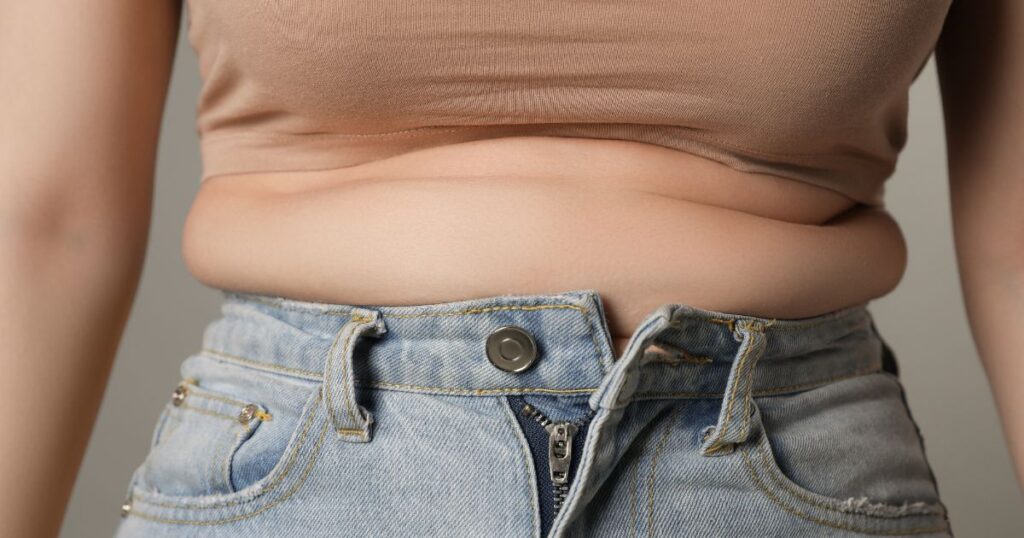
Why this feels so frustrating
One of the hardest parts of perimenopause weight changes is that they often seem disconnected from behaviour.
You may feel like:
“I haven’t changed anything, so why is my body changing?”
Many women notice:
- increased belly fat
- feeling softer around the midsection
- more bloating or puffiness
- clothing fitting differently
- weight becoming harder to lose
This can happen even if the number on the scale barely changes.
If you constantly feel puffier, heavier or more swollen, hormonal changes may also be contributing to fluid retention and body composition changes. Read our guide on why perimenopause causes bloating and puffiness to better understand what may be happening.
Hormonal changes and belly fat
During perimenopause, estrogen fluctuates and gradually declines.
These hormonal changes influence:
- fat storage patterns
- insulin sensitivity
- stress response
- muscle mass
- metabolic flexibility
One common change is a shift toward more abdominal fat storage.
Many women notice that fat distribution changes even without dramatic weight gain.
This is one reason why belly fat may suddenly appear despite eating similarly to before.
Importantly, this does not mean fat gain is inevitable or uncontrollable — but it often means older strategies stop working as well.
Insulin resistance and blood sugar changes
Another overlooked reason belly fat becomes more stubborn during perimenopause is changing insulin sensitivity.
Insulin helps regulate blood sugar and energy storage.
As insulin sensitivity worsens, the body may become more likely to:
- store energy as fat
- experience stronger cravings
- struggle with abdominal fat accumulation
This is especially relevant during perimenopause because hormonal fluctuations can affect how efficiently the body processes glucose.
If you want to understand this mechanism in more detail, read our guide on insulin resistance and belly fat in perimenopause.
Cortisol and stress may be contributing
Stress hormones also play an important role.
Poor sleep, chronic stress and nervous system dysregulation may increase cortisol levels.
Persistently elevated cortisol may contribute to:
- abdominal fat storage
- increased cravings
- fatigue
- poor recovery
- disrupted sleep
This creates a frustrating cycle:
poor sleep → higher stress → more cravings → harder body composition changes
Many women notice this worsens during stressful periods or when sleep quality declines.
If poor sleep has become part of the problem, our guide to best supplements for sleep in perimenopause explains what may help support better rest.
Why calories are not the full story
Perimenopause weight gain is often treated like a willpower problem.
But calories are only one part of the picture.
Hormones influence:
- hunger
- satiety
- muscle mass
- energy expenditure
- fat storage patterns
This means “eat less and move more” may become less effective than it used to be.
That does not mean calories stop mattering.
It means body composition becomes more complex.
Many women find that supporting metabolic health, preserving muscle and improving insulin sensitivity becomes more effective than aggressive calorie restriction.
What may help support metabolism during perimenopause
There is no supplement that overrides hormones or instantly removes belly fat.
However, certain approaches may help support:
- insulin sensitivity
- metabolic flexibility
- muscle preservation
- energy regulation
If you’re looking for practical options, this guide to best supplements for perimenopause weight gain breaks down what may actually help.
What Actually Helps (Simple Starting Point)
If belly fat suddenly feels harder to manage during perimenopause, the goal is not extreme dieting — it is supporting how your body is changing.
Simple changes that support blood sugar balance, muscle maintenance, sleep quality and stress regulation often produce more sustainable results than restriction alone.
Small changes that may help
Many women find it useful to focus on:
- increasing protein intake
- resistance training rather than excessive cardio
- improving sleep quality
- stabilising blood sugar
- reducing chronic stress load
Small consistent shifts usually outperform extreme approaches.
When to look deeper
If weight gain is sudden, severe or accompanied by symptoms such as fatigue, hair loss or major energy changes, it may be worth exploring:
- thyroid function
- iron levels
- sleep quality
- insulin resistance
- medication effects
Weight gain is common during perimenopause — but context matters.
Final thoughts
Gaining belly fat during perimenopause despite eating healthy can feel discouraging, but it often reflects hormonal and metabolic changes rather than lack of effort.
Your body is changing.
That does not mean you are powerless — it means the strategy may need to change too.
Supporting metabolism, sleep, blood sugar balance and muscle preservation often becomes more important than simply eating less.
FAQ
Why am I gaining belly fat during perimenopause?
Hormonal fluctuations, changes in insulin sensitivity, cortisol and muscle loss may all contribute to increased abdominal fat storage.
Can perimenopause cause belly fat even if I eat healthy?
Yes. Many women notice changes in fat distribution during perimenopause despite maintaining healthy habits.
Is belly fat in perimenopause caused by hormones?
Hormones are often part of the picture, especially estrogen changes, insulin sensitivity and cortisol regulation.